Telescopic Hoist vs. Scissor Hoist: Differences in Lift Capacity, Dump Angle, and Stability
If you're shopping for a dump trailer, you'll quickly discover that not all hydraulic lifting systems are built the same. While trailer capacity, axle ratings, and construction often receive the most attention, the hoist system is important to how the trailer performs over years of hauling.
Many buyers wonder whether a scissor hoist trailer or a telescopic hoist is a better investment. The answer depends on how you use the trailer every day.
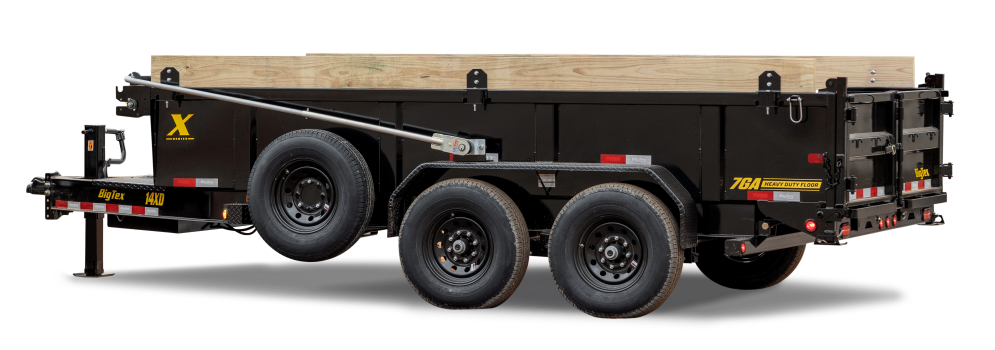
At Big Tex Trailer World, we help contractors, landscapers, excavation crews, and commercial haulers compare these systems. Models equipped with the X-Series scissor hoist have become a popular choice because they combine lifting power with excellent stability, but understanding the differences between the two designs will help you choose the right trailer for your operation.
How Each Hoist System Works
Although both systems perform the same basic job, they lift the trailer bed in very different ways.
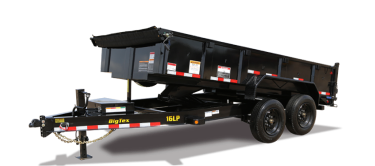
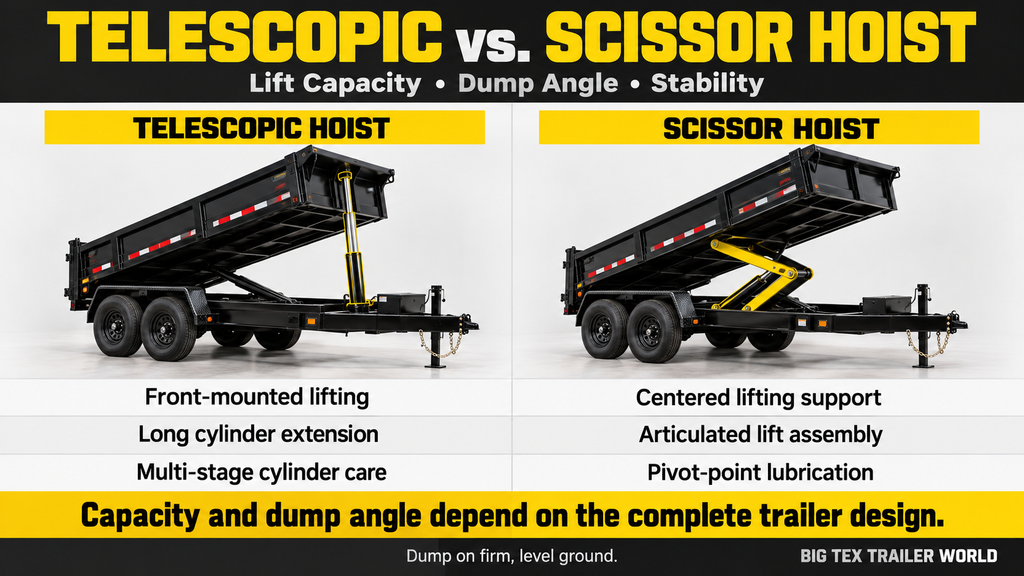
A scissor hoist trailer uses a centrally mounted scissor mechanism positioned beneath the trailer bed. As the hydraulic cylinder extends, the scissor assembly raises the bed evenly from the center.
A telescopic hoist uses one or more hydraulic cylinders mounted near the front of the trailer. The cylinders extend upward in stages, lifting the trailer bed from the front.
Both systems are proven designs. The difference lies in how force is applied during the lifting cycle.
Lift Capacity
One of the biggest misconceptions is that telescopic hoists always lift heavier loads.
In reality, lift capacity depends on the complete trailer design, including:
- Gross Vehicle Weight Rating (GVWR)
- Hydraulic system
- Frame construction
- Axle ratings
- Cylinder size
A well-engineered scissor hoist trailer can handle demanding commercial workloads while delivering excellent lifting performance throughout the dump cycle.
For contractors hauling gravel, mulch, demolition debris, or compact equipment, the limiting factor is often the trailer's overall capacity rather than the hoist itself.
Instead of focusing solely on the hydraulic cylinder, experienced buyers evaluate how the hoist system works with the trailer's frame, suspension, and overall construction.
Stability During the Lift
This is where the differences become more noticeable.
Because a scissor hoist trailer lifts from the center of the chassis, lifting forces remain balanced throughout much of the dump cycle.
That centered lifting action provides several practical advantages:
- Improved side-to-side stability
- Reduced frame twist
- Smoother lifting motion
- Consistent support under uneven loads
This becomes particularly valuable when dumping loads that shift unexpectedly, such as wet soil, broken concrete, brush, or mixed construction debris.
Operators working on uneven jobsites often appreciate the confidence that comes from a stable lifting platform.
Telescopic hoists remain very capable, but because force is applied from the front of the trailer, maintaining proper load placement becomes even more important when handling uneven material.
Dump Angle and Material Flow
Dump angle affects how efficiently material leaves the trailer.
Sticky materials like clay, wet mulch, or saturated topsoil often require steeper dump angles than dry gravel or sand.
Many telescopic systems are capable of achieving very steep dump angles because the multi-stage cylinder extends farther during operation.
But, dump angle alone does not determine unloading performance.
Trailer bed design, floor material, load consistency, and how evenly the trailer is loaded all influence how easily material releases.
For many commercial users, a scissor hoist trailer provides more than enough dump angle for daily hauling while offering greater confidence during lifting.
Maintenance Considerations
Every hydraulic system requires regular maintenance.
Routine inspections should include:
- Hydraulic hoses
- Cylinder seals
- Pivot points
- Grease fittings
- Mounting hardware
Scissor hoist systems include additional pivot points that should be lubricated according to the manufacturer's recommendations.
Telescopic cylinders contain multiple extending stages that should be kept clean and inspected for damage.
Neither design is inherently high maintenance when serviced properly. Long-term reliability depends far more on routine inspections than on the style of hoist.
Which Industries Benefit Most From Each Design?
The right hoist depends on the work being performed.
A scissor hoist trailer is often preferred for:
- Landscaping
- Construction
- Roofing
- Excavation
- Municipal maintenance
- General contractors
Its balanced lifting characteristics make it an excellent choice for operators who routinely haul mixed materials over varying terrain.
A telescopic dump trailer may be attractive for operators who frequently haul materials that benefit from maximum dump height or specialized unloading applications.
Understanding how your trailer is used every day is far more valuable than comparing specifications in isolation.
Think Beyond Today's Jobs
One mistake many buyers make is selecting a trailer based only on current workloads.
Ask yourself:
- Will I begin hauling heavier materials?
- Am I adding another crew?
- Will I purchase larger equipment?
- Will this trailer still fit my operation five years from now?
Professionals often buy for where their business is headed rather than where it is today.
That approach usually leads to better long-term value and fewer equipment upgrades.
Why Construction Quality Still Matters Most
While hoist design receives plenty of attention, it is only one part of the trailer.
Frame construction, crossmember spacing, suspension design, braking system, and hydraulic quality all work together.
Even the best hoist cannot compensate for a weak frame or undersized running gear.
When evaluating scissor hoist dump trailers, treat them as a complete system rather than focusing on a single component.
That broader perspective often separates trailers that perform reliably for years from those that spend unnecessary time in the shop.
Frequently Asked Questions
Is a Scissor Hoist Trailer Better Than a Telescopic Hoist?
Neither system is universally better. A scissor hoist trailer typically offers excellent stability and balanced lifting, while telescopic hoists may provide greater dump height for certain applications.
Which Hoist Is Better for Landscaping?
Many landscapers prefer a scissor hoist trailer because it provides stable lifting when hauling mulch, soil, stone, and other loose materials.
Does a Telescopic Hoist Lift More Weight?
Not necessarily. Lift capacity depends on the trailer's complete design, including GVWR, frame strength, hydraulic components, and axle ratings.
Which System Requires Less Maintenance?
Both systems require regular inspection and lubrication. Proper maintenance has a much greater impact on longevity than the choice of hoist style.
Which Trailer Should I Choose?
Choose the trailer that matches the work you perform most often. Consider load type, dumping conditions, future equipment needs, and overall trailer construction rather than comparing hoist designs alone.
Choose the Hoist That Matches Your Operation
The right hydraulic system is the one that supports the way you work.
If stability, balanced lifting, and everyday versatility are your priorities, a scissor hoist trailer is an outstanding choice for many commercial applications. If maximum dump height is critical for your work, a telescopic system may be worth considering.
At Big Tex Trailer World, we help customers compare the complete trailer, not just one component. When the frame, suspension, hydraulics, and hoist are engineered to work together, you gain a trailer that performs the job reliably year after year.