Choosing the Best Trailer for Hauling ATVs and Motorcycles
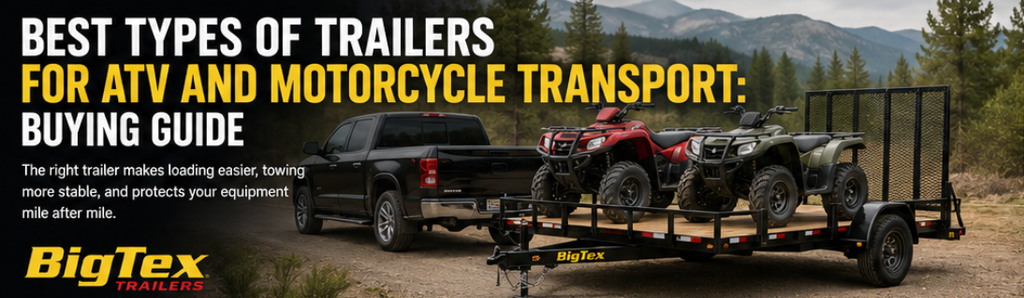
Choosing the right trailer for powersports equipment is usually more complicated than buyers expect. Most people start by looking at deck dimensions or price, but experienced haulers focus on loading angle, tie-down access, towing stability, and how the trailer behaves after years of regular use.
That is especially true when comparing the best trailer for hauling ATVs and the best trailer for hauling motorcycles. While both can transport recreational equipment, the trailer requirements differ significantly once you consider weight distribution, loading style, suspension movement, and long-term durability.
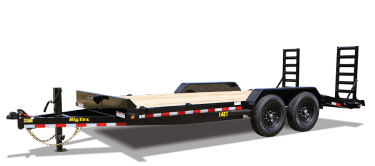
For many owners, dedicated ATV utility trailers become the practical choice because they balance maneuverability, cargo flexibility, and secure transport without overcomplicating the setup.
The right trailer should not simply fit the machine. It should make loading predictable, towing stable, and repeated hauling less stressful over time.
Why Trailer Choice Matters More Than Buyers Expect
A trailer that technically works is not always a trailer that works well.
This becomes obvious quickly when loading multiple ATVs, hauling motorcycles long distances, or towing through uneven terrain. Buyers often underestimate how much trailer design affects:
- Load stability
- Tie-down positioning
- Tongue weight balance
- Ramp angle
- Suspension stress during transport
For example, a trailer that feels fine hauling a single ATV across town may feel unstable once a second machine is added or when highway speeds increase.
The same applies to motorcycles. Improper deck width, weak tie-down locations, or poor suspension balance can allow unnecessary movement during transport, increasing wear and making towing more stressful.
That is why experienced owners spend less time focusing on minimum specifications and more time evaluating how the trailer performs under real-world hauling conditions.
Utility Trailers for ATV Transport
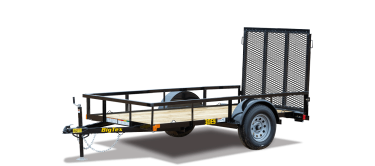
For many buyers searching for the best trailer for hauling ATVs, utility trailers remain the most versatile option.
A properly built ATV utility trailer provides:
- Low deck height for easier loading
- Flexible tie-down placement
- Manageable towing weight
- Room for gear, fuel, and accessories
This becomes important once owners start carrying more than just the machines themselves. Coolers, spare tires, fuel cans, toolboxes, ramps, and riding equipment all compete for deck space.
Many first-time buyers underestimate how quickly ATV setups grow. Someone starts with one machine and eventually adds another ATV, a side-by-side, or additional cargo. That is why slightly more deck space often becomes valuable over time.
At Big Tex Trailers, utility trailer configurations are designed for repeated loading cycles and rougher hauling conditions, not occasional transport alone. Reinforced frames, stable axle configurations, and durable deck construction matter when trailers see regular highway use and off-road access roads.
Motorcycle Trailers Require Different Considerations
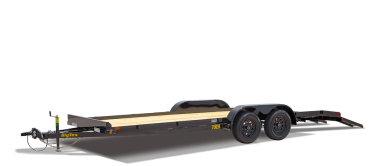
The best trailer for hauling motorcycles usually prioritizes stability and secure tie-down geometry over raw cargo volume.
Motorcycles create unique transport challenges because the load is narrow, upright, and sensitive to movement. Improper tie-down angles or insufficient anchor points can allow suspension movement, affecting stability during transport.
A purpose-built motorcycle trailer often includes:
- Lower loading angles
- Cleaner wheel positioning
- Easier walk-around access
- Stable tie-down spacing
These details matter more than many buyers realize. Loading a motorcycle onto an overly tall trailer or one with awkward fender placement quickly becomes frustrating, especially after long rides or during poor weather.
Smaller utility trailers can work for motorcycles, but the loading process and tie-down layout should always be evaluated before purchase.
Tilt Trailers and Off-Road Applications
Some buyers prioritize loading simplicity and terrain access over traditional ramp systems.
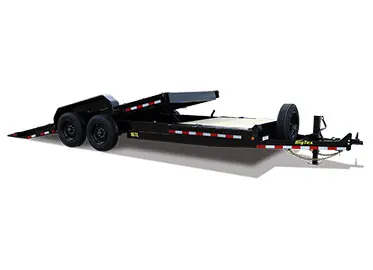
For those situations, an off-roading trailer or tilt-style platform can significantly simplify loading. Tilt trailers reduce ramp angle concerns and make it easier to load heavier ATVs, side-by-sides, or motorcycles with lower ground clearance.
This becomes especially useful when:
- Loading in muddy conditions
- Transporting heavier side-by-sides
- Minimizing loading time
- Reducing ramp storage issues
Tilt systems also improve loading predictability because the trailer deck stays more stable during equipment transitions.
For operators who regularly haul powersports equipment, that consistency matters.
Length and Width Matter More Than Buyers Expect
One of the most common mistakes buyers make is choosing the smallest trailer that technically fits the equipment.
In practice, usable space matters more than minimum dimensions.
For ATV hauling, additional width helps with:
- Tie-down positioning
- Gear storage
- Walking around equipment safely
For motorcycles, extra deck length creates greater flexibility for wheel chocks, tool storage, and tie-down angles.
This is why experienced owners often say the same thing: Very few people regret having slightly more trailer space, but many regret not having enough.
That does not mean you should unnecessarily buy oversized trailers. Larger trailers weigh more, require more storage space, and place greater demands on the tow vehicle. The goal is to balance maneuverability with long-term usability.
Towing Stability and GVWR
The trailer itself is only part of the equation. GVWR and towing balance matter just as much.
A trailer operating near its maximum limit constantly will:
- Stress suspension systems
- Increase tire wear
- Reduce braking confidence
- Tow less predictably at highway speeds
This becomes especially important when hauling multiple ATVs or heavier side-by-sides. Many buyers calculate only the machine weight, forgetting fuel, accessories, spare parts, and cargo.
The best trailer for hauling ATVs is not simply the one with enough deck space. It’s the one with enough GVWR and structural stability to comfortably handle real-world working weight.
The same principle applies to the best trailer for hauling motorcycles, especially for long-distance towing, where crosswinds, uneven pavement, and repeated travel cycles affect trailer behavior over time.
Built For Long-Term Use
At Big Tex Trailers, trailer design starts with durability because repeated towing quickly exposes weaknesses.
Trailers built for powersports hauling should prioritize:
- Reinforced tie-down locations
- Stable axle configurations
- Durable deck construction
- Predictable towing behavior
- Long-term structural integrity
These factors matter far more over time than cosmetic upgrades or minimum-entry pricing.
The right trailer should feel stable, easy to load, and dependable every time it leaves the driveway.
Frequently Asked Questions
FAQ
What Is The Best Trailer For Hauling ATVs?
For most owners, tandem-axle utility trailers offer the best balance of cargo space, stability, and long-term durability.
What Is The Best Trailer For Hauling Motorcycles?
A lower-profile trailer with stable tie-down positioning and manageable loading angles typically works best for motorcycles.
Are Tilt Trailers Good For ATV Transport?
Yes. Tilt trailers simplify loading and reduce ramp-angle issues, especially for heavier machines and uneven terrain.
How Much Trailer Space Do I Need?
Most buyers benefit from slightly more deck space than their current equipment requires, especially if they plan to add gear or additional machines later.
Does Trailer Weight Matter For Powersports Hauling?
Absolutely. Trailer GVWR, towing balance, and axle configuration all affect stability, braking, and long-term durability.
Choose A Trailer That Fits The Way You Haul
The best trailer setups are the ones that remain easy to live with over time.
Whether you are comparing the best trailer for hauling ATVs or evaluating the best trailer for hauling motorcycles, focus on how the trailer performs during real loading, towing, and unloading situations, not just what fits on paper.
The right trailer should support your equipment, workflow, and the way you actually travel.