New vs. Used Trailers: Pros and Cons
New vs. Used Trailers: Pros and Cons
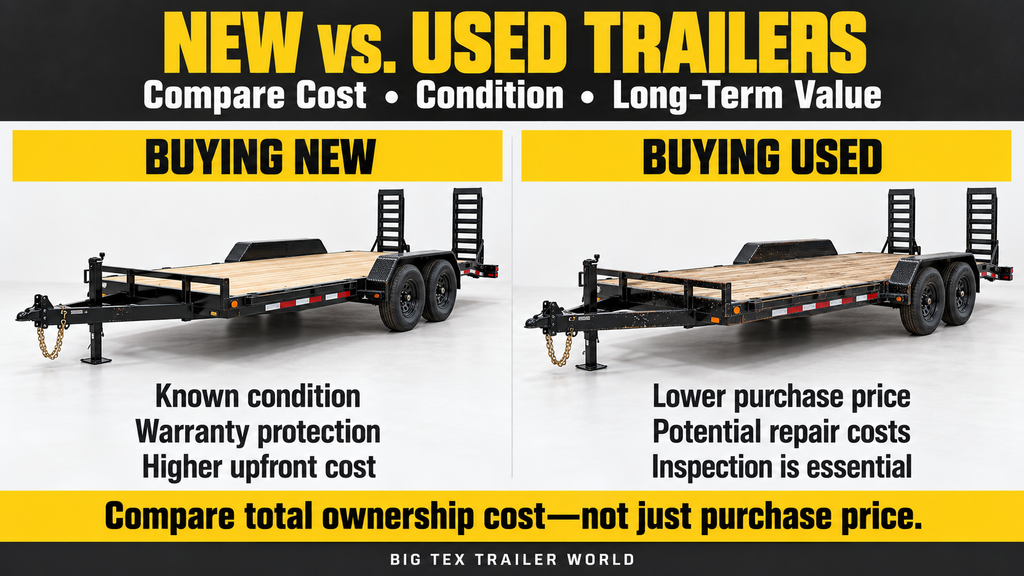
Choosing between a new trailer and a used trailer is not only a question of purchase price. Professional operators need to consider reliability, maintenance history, warranty coverage, financing, and how quickly the trailer can be put to work. A lower upfront cost may look attractive, but downtime and unexpected repairs can reduce the value of those initial savings.
When comparing new vs. used trailers, start by considering how the trailer will support your operation. If it will be used daily for construction, landscaping, agriculture, equipment transport, or another demanding trade, condition and dependability should carry more weight than price alone.
Buyers looking for a used trailer should evaluate each option carefully rather than assuming every pre-owned unit offers the same value.
The Advantages of Buying a New Trailer
A new trailer provides a clean starting point. There is no unknown maintenance history, previous overloading, hidden frame damage, or wear caused by another operator. You know how the trailer has been used from its first day in service.
New trailers also provide access to current designs, updated components, and model configurations built around modern professional needs. Depending on the trailer, this may include improved ramp systems, stronger tie-down points, updated lighting, better hydraulic components, or layouts designed for more efficient loading.
Warranty protection is another major advantage. A warranty does not eliminate the need for proper inspection and maintenance, but it can reduce financial risk during the early years of ownership. For operators who depend on a trailer to generate revenue, predictable ownership costs can be more important than securing the lowest purchase price.
The Disadvantages of Buying a New Trailer
The primary drawback is the higher upfront cost. New trailers generally require a larger investment than comparable used models.
They may also experience depreciation during the first years of ownership. However, professional buyers should evaluate depreciation alongside productivity. A trailer that stays in service, reduces repair interruptions, and supports larger jobs may provide stronger overall value even if its resale value declines.
Buying new can also require more careful model selection. The wide range of sizes, axle ratings, deck styles, and configurations makes it important to choose a trailer based on real workload requirements rather than appearance or price.
The Advantages of Buying a Used Trailer
Used trailers can offer significant savings, especially when they have been properly maintained and remain structurally sound. A well-kept trailer may provide years of dependable service at a lower purchase price.
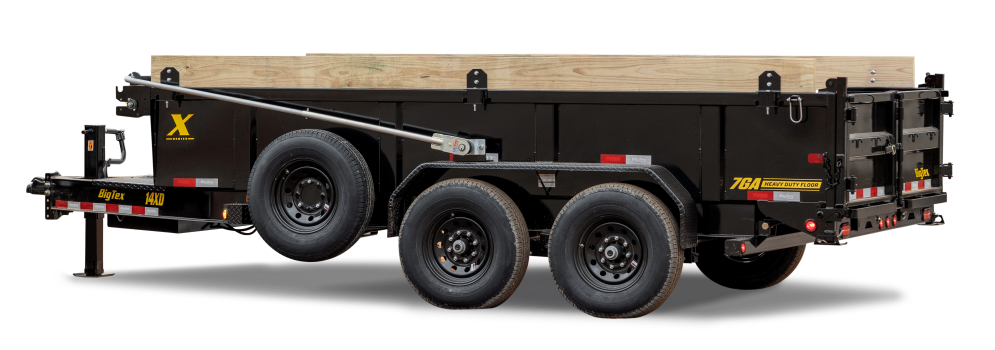
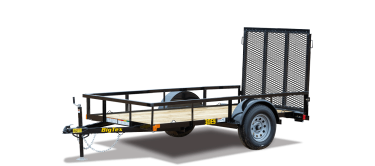
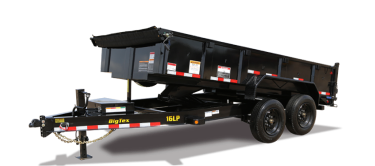
Used inventory can also help you purchase a larger or more capable trailer without exceeding your budget. For example, a contractor may be able to move from a basic utility model to an available dump trailer by choosing a pre-owned unit.
Depreciation may be less significant with a used purchase because the previous owner has already absorbed part of the trailer's early value reduction. This can make used trailers attractive to buyers who plan to trade or resell the unit within a few years.
The strongest used purchases usually come from established dealers that can provide clear information about the trailer's condition and help buyers compare realistic options.
The Disadvantages of Buying a Used Trailer
The greatest concern is uncertainty.
A trailer may look clean while still having problems caused by overloading, poor maintenance, or years of hard use. Bent frames, worn suspension components, damaged wiring, weak brakes, tire deterioration, and hydraulic leaks can turn a low purchase price into a much more expensive investment.
Maintenance history is not always available. Even when records exist, they may not reveal how heavily the trailer was loaded or how often it traveled on rough roads and jobsites.
Used trailers may also offer limited warranty coverage. Buyers should account for the possibility of repairs shortly after purchase and have the trailer inspected before making a decision.
What to Inspect on a Used Trailer
A used trailer inspection should go beyond checking the paint and tires.
Start with the frame. Look for cracks, bends, fresh welds, heavy corrosion, or signs of overload. Inspect the deck for rot, broken boards, soft spots, and damage around attachment points.
Check the following components:
- Axles and suspension
- Wheel bearings
- Brakes and breakaway system
- Tires and wheels
- Wiring and lights
- Coupler and safety chains
- Ramps, gates, and hinges
- Hydraulic system, when equipped
- Tie-down points
A trailer used in commercial work should also be evaluated for current capacity needs. Even a well-maintained used trailer is a poor purchase if its Gross Vehicle Weight Rating (GVWR), deck dimensions, or axle configuration cannot safely support your equipment.
When a New Trailer Makes More Sense
A new trailer is often the stronger choice when uptime is critical. If missed work means lost revenue, the predictability of a new unit can justify the additional cost.
Buying new also makes sense when you need a specific configuration. Professional operators may need a certain deck length, payload rating, ramp design, axle setup, or body style that is difficult to locate in the used market.
Big Tex offers new trailers built for demanding applications across construction, landscaping, agriculture, and equipment transport. The ability to compare purpose-built models allows buyers to choose a trailer that fits their current workload without accepting the compromises of limited used inventory.
When a Used Trailer Makes More Sense
A used trailer may be the right choice if it has been inspected, meets your work requirements, and offers enough savings to justify its age and condition.
It can also make sense as a secondary trailer. A landscaping company, for example, may purchase a used utility trailer for lighter materials while reserving its primary equipment trailer for heavier machines.
The key is to calculate the total ownership cost. Purchase price is only one part of the equation. Tires, brakes, bearings, wiring, decking, hydraulics, and structural repairs should all be considered before deciding that a used trailer is the less expensive option.
Compare the Full Financial Picture
The choice between new vs. used trailers should include more than the cash price shown on the trailer.
New buyers may have access to longer repayment terms, manufacturer support, and trailer financing that helps preserve working capital. A monthly payment on a dependable trailer may be easier to manage than an unexpected repair bill that takes a used trailer out of service.
Used trailers may have a lower purchase price, but financing terms can vary based on age, condition, and lender requirements. Compare the total amount paid, expected maintenance costs, warranty protection, and anticipated resale value.
Frequently Asked Questions
Is It Better to Buy a New or Used Trailer?
It depends on your workload, budget, and tolerance for repair risk. New trailers provide predictable condition and warranty protection, while used trailers may offer a lower initial cost.
Do Used Trailers Hold Their Value?
Well-maintained trailers from established brands can retain meaningful value. Condition, capacity, configuration, and maintenance history all affect resale potential.
What Is the Biggest Risk When Buying Used?
The biggest risk is hidden wear or damage. A professional inspection can help identify frame, axle, brake, tire, electrical, and hydraulic problems before purchase.
Are New Trailers Worth the Higher Price?
For operators who depend on consistent uptime, a new trailer can be worth the higher investment. Warranty coverage, known condition, and the ability to select the correct configuration can reduce long-term operating risk.
Choose Based on Long-Term Performance
The right answer in the new vs. used trailers comparison depends on how the trailer will perform after the purchase, not just what it costs on the day you buy it.
A professional trailer should protect your equipment, support your workload, and remain available when jobs are scheduled. Big Tex Trailer World helps buyers compare dependable new and used options based on capacity, condition, and real operating needs.
Choose the trailer that strengthens your operation for the long haul. The best value is the trailer that performs consistently, minimizes downtime, and continues to earn its place in your fleet.